Strawberry Tiramisu — decadent, airy, and bright, this is a guaranteed way to steal someone’s heart this Valentine’s! With layers of vanilla whipped cream, juicy strawberries, and coffee-dipped ladyfingers, this is a no-bake dessert that’s ready to impress!
Tiramisu is one of my favorite deserts, and this version brightens it up with a fruity twist. With butter notes from the coffee and tartness from the strawberries cutting through the rich whipped cream, balance is this tiramisu’s speciality!
Strawberry Tiramisu — decadent, airy, and bright, this is a guaranteed way to steal someone’s heart this Valentine’s! With layers of vanilla whipped cream, juicy strawberries, and coffee-dipped ladyfingers, this is a no-bake dessert that’s ready to impress!
Course:
Dessert
Cuisine:
Italian
Keyword:
valentines
Custom Category:
Desserts
Servings: 8
Calories: 288kcal
Author: Nidhi Bothra
Ingredients
Vanilla Whipped Cream:
16ozheavy whipping cream, chilled
8ozmascarpone cheese, at room temperature and whipped until smooth
1tspvanilla essence
1/3cuppowdered sugar or confectioners (icing) sugar
In a chilled bowl, gently whisk chilled heavy whipping cream using an electric whisker until soft peaks form. Add in the vanilla essence and powdered sugar in between whipping. Then, gently fold in your room temperature whipped mascarpone cheese. Let sit in the fridge.
To make the coffee syrup, mix the instant coffee powder, hot water, and sugar until dissolved. Let cool until ready to assemble.
To assemble the Strawberry Tiramisu, you can either use individual serving dishes or a larger dish. Fill your vanilla cream into a piping bag. Pipe a layer at the bottom of your dish.
Dip your biscuits in the coffee mixture and then place a layer on top. Pipe another layer of cream and gently add your chopped strawberries. Add in more cream to fill the dish and use a spatula to level the top.
To garnish, add diced strawberries, edible flowers, and a dusting of cocoa powder, freeze-dried strawberry powder, and golden sprinkles. Chill for at least an hour before serving and enjoy!
Recipe Video
Recipe Notes
This can be made ahead a day before a party and kept in the fridge.
Nutrition Facts
Strawberry Tiramisu
Amount Per Serving
Calories 288Calories from Fat 207
% Daily Value*
Fat 23g35%
Saturated Fat 14g88%
Polyunsaturated Fat 1g
Monounsaturated Fat 6g
Cholesterol 114mg38%
Sodium 49mg2%
Potassium 117mg3%
Carbohydrates 17g6%
Fiber 1g4%
Sugar 3g3%
Protein 4g8%
Vitamin A 972IU19%
Vitamin C 11mg13%
Calcium 53mg5%
Iron 1mg6%
* Percent Daily Values are based on a 2000 calorie diet.
p style=”margin: 0; margin-bottom: 1.5em;”>I’d love to hear how the recipe turned out and what you think in the comment section below. Find me on and share your creation with me!
Vegetable Badam Tehri (Biryani) has its origins from the era of Indian royal kings. It is a very scrumptious, aromatic and lavish dish which is truly passed on as a rich culinary legacy. Indeed it requires a bit more of time and hard work than the usual rice preparations but then trust me, the end result is worth all the efforts.
The Vegetable Badam Tehri is a perfect medley of delectable flavors and appetite inducing aromas with a variety of soft-sweet vegetables, long grain rice, authentic spices and rich paste of almond. It is a multi-step process where I first boiled the rice, took a healthy bunch of vegetables and cooked it in some fiery Indian spices like cardamom, shahi masala, saffron, mint to get the brilliance of bold flavors and aroma and lastly prepared a sweet composition of almonds, milk, rose water and cream called as Tehri.
With Tehri kept in between, the appeal to the biryani is added by pristinely arranging the vegetables and rice in layers and further garnishing it with some cilantro and flowers. The Vegetable Badam Tehri (Biryani) is undoubtedly a flavorful, fragrant and filling dish. Make it on a holiday for lunch and serve it piping hot to experience the genuine old-time regal touch of meals!
Vegetable Badam Tehri (Biryani), an aromatic dish from the era of royal Indian kings. It is a medley of delectable flavors and appetite inducing aromas with a variety of soft-sweet vegetables, long grain rice, authentic spices and rich almond paste. Perfect for a party or festive occasion.
Course:
Dinner, Lunch, Main Course
Cuisine:
Indian
Keyword:
festive, party
Custom Category:
Dinner, Diwali, Indian Main Course, Lunch, Main Course, Rice
In a saucepan, heat up some ghee, cumin seeds, salt, black pepper, bay leaves, and rice. Toss it together lightly and top it off with mint and cilantro.
Heat a heavy bottom saucepan on medium heat and add in ghee, cumin seeds, bay leaves, dried red chili, star anise, cinnamon sticks, ginger, green chili paste, black cardamom, mace, green cardamom, and cloves. Let the spices roast for 2 minutes and add in potatoes. Sauté for 2 more minutes and then add in water and salt and cover the pot until the potatoes are fork tender.
Add in tomato purée and sauté for 2-3 minutes more. Put in the bell peppers, all the vegetables and sauté for 2 minutes. Now, add paneer and cook for a few more minutes. Add in salt, turmeric powder, red chili powder, coriander powder, mango powder, shahi masala, and cream. Cook for a few more minutes and the vegetables are ready!
Take another pan and add ghee, ginger, and green chili paste. Sauté it for a few minutes and add the almond paste. Lower the flame so the paste doesn’t burn, but the water evaporates. Sauté for 2-3 minutes and then add kasoori methi and cook again.
Take out 1 tsp milk and soak the saffron in it. Leave this mixture aside. Put the rest of the milk and cream into the pan and let it cook for 5-7 minutes until the tehri starts to thicken in low flame. Add in saffron milk that was prepared a little while ago. Now finish it off with the salt, sugar, turmeric powder, and shahi masala. Simmer for 1-2 more minutes and the tehri is ready.
Grease the serving dish (preferably a bundt cake pan), which should be heat safe. Soak the saffron and rose water in the milk and set aside. First, form a layer with half the rice and then make the second with all of the vegetables. Sprinkle half of the milk mixture of saffron and rose on top of the vegetables generously and then top it off with some mint and cilantro. Add in the second half of the rice and rest of the saffron-milk mixture.
Put a layer of aluminum foil on top for when you heat it in a microwave (or oven). When you’re ready to serve it, turn the biryani onto a plate and pour the tehri in the hole. Please note that the tehri should be warm and poured only when you are ready to serve, otherwise it will become dry. Garnish with cilantro and some chopped almonds and pistachios.
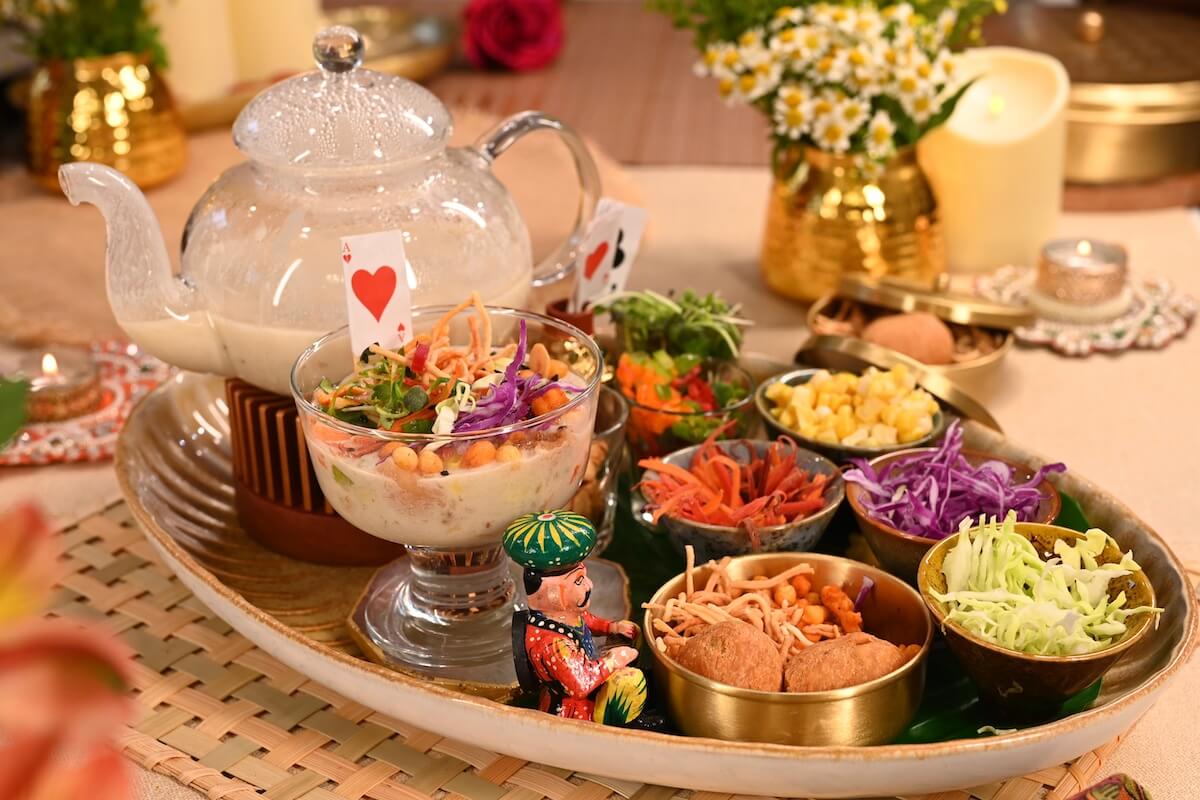
Taking our traditional Rajasthani Bajra Raab to the next level with this Bajra Raab Khow Suey! A warm, comforting winter favorite with a fun, flavorful makeover!
This time, I’ve given this traditional favorite a playful Khow Suey-style twist! The warm, creamy bajra raab gets a subtle smoky flavor from a ghee and charcoal dhungar, bringing out its wonderful earthy flavors.
But what makes this version really special is the presentation! I’m serving the hot raab in a kettle over a little warmer, with an assortment of colorful vegetables, mini dal kachoris, crispy noodles, masala boondi, and delicious garnishes.
WATCH HOW TO MAKE BAJRA RAAB KHOW SUEY:
The mini dal kachoris form the base, followed by sweet corn and colorful bell peppers. The hot raab is poured over everything, finished with shredded vegetables, crunchy noodles, boondi, crispy garlic, microgreens, and a drizzle of sesame chili oil or ghee.
And just like Khow Suey, the possibilities for toppings are endless! Everyone can build their own glass with their favorite accompaniments, making this dish as much about the experience as it is about the flavors.
A wonderful combination of traditional Rajasthani comfort and a creative, interactive presentation, this Bajra Raab Khow Suey is perfect for cozy winter evenings, festive gatherings, and entertaining guests.
A Rajasthani winter favorite with a whole new twist! Warm, creamy Bajra Raab with a hint of smokiness, poured over mini dal kachoris, colorful veggies, and topped with crispy noodles, masala boondi, and all those delicious crunchy garnishes!
Served hot from a little kettle, with endless possibilities for toppings so everyone can create their own glass just the way they like it! A little tradition, a little creativity, and a whole lot of comfort! ❤️
In a mixing bowl, combine yogurt, bajra flour, and 4 cups of water. Whisk everything together until smooth and lump-free.
Transfer the mixture to a heavy-bottomed pan over medium heat. Stir continuously until it comes to a boil. This prevents lumps from forming and helps keep the yogurt from curdling.
Once it comes to a boil, reduce the heat and let it simmer for about 5 minutes, stirring occasionally.
Add salt, roughly crushed cumin seeds, finely minced ginger, chopped green chili, and sugar to balance the taste. Mix well.
Add 1 tbsp ghee and continue simmering for another 5–7 minutes until the bajra flour is cooked and the raab develops a smooth, creamy consistency.
Adjust the consistency with additional hot water as needed. The raab should remain smooth and pourable, as it will be served from a kettle.
Give the Raab a Smoky Dhungar:
Heat a small piece of natural, food-safe charcoal until red-hot. Place a small heatproof steel bowl inside the pan containing the cooked raab. Carefully place the hot charcoal into the steel bowl and pour 1 tsp ghee over it. Immediately cover the pan with a tight-fitting lid and let the smoke infuse briefly. Carefully remove the charcoal and the steel bowl. That subtle hint of smokiness brings out the wonderful earthy flavors of the bajra raab!
Assemble the Bajra Raab Khow Suey:
Transfer the hot bajra raab into a heat-safe serving kettle and place it over a suitable small food warmer to keep it warm.
In individual heat-safe serving glasses or bowls, lightly crush the mini dal kachoris at the bottom. Add some boiled corn and finely chopped colorful bell peppers.
Pour the hot, creamy bajra raab over the kachoris and vegetables.
Top with shredded purple cabbage, shredded carrots, crispy noodles, masala boondi, and crispy garlic. Finish with fresh microgreens and a drizzle of sesame chili oil or ghee, as preferred.
Serve immediately while the raab is hot and the toppings are crunchy.
Recipe Video
Recipe Notes
Consistency: Bajra Raab thickens as it sits. Adjust with a little additional hot water whenever needed to maintain a smooth, pourable consistency.
Cooking: Keep stirring continuously until the raab comes to a boil to prevent lumps and curdling.
Dhungar: Use only natural charcoal suitable for culinary smoking, never lighter-fluid-treated charcoal. Keep it separate from the raab and carefully remove it before serving.
Kachoris: Store-bought mini dal kachoris work perfectly for this recipe. Lightly crush them in the serving glasses before adding the raab.
Crunchy toppings: Add crispy noodles, masala boondi, and garlic just before serving to retain their crunch.
Serving: Arrange the accompaniments separately so everyone can customize their own glass.
Make ahead: The raab can be prepared in advance and gently reheated. Adjust the consistency with additional water before serving.
Nutrition Facts
Bajra Raab Khow Suey
Amount Per Serving
Calories 146Calories from Fat 54
% Daily Value*
Fat 6g9%
Saturated Fat 3g19%
Polyunsaturated Fat 2g
Monounsaturated Fat 2g
Cholesterol 11mg4%
Sodium 158mg7%
Potassium 144mg4%
Carbohydrates 18g6%
Fiber 1g4%
Sugar 4g4%
Protein 5g10%
Vitamin A 23IU0%
Vitamin C 1mg1%
Calcium 87mg9%
Iron 1mg6%
* Percent Daily Values are based on a 2000 calorie diet.
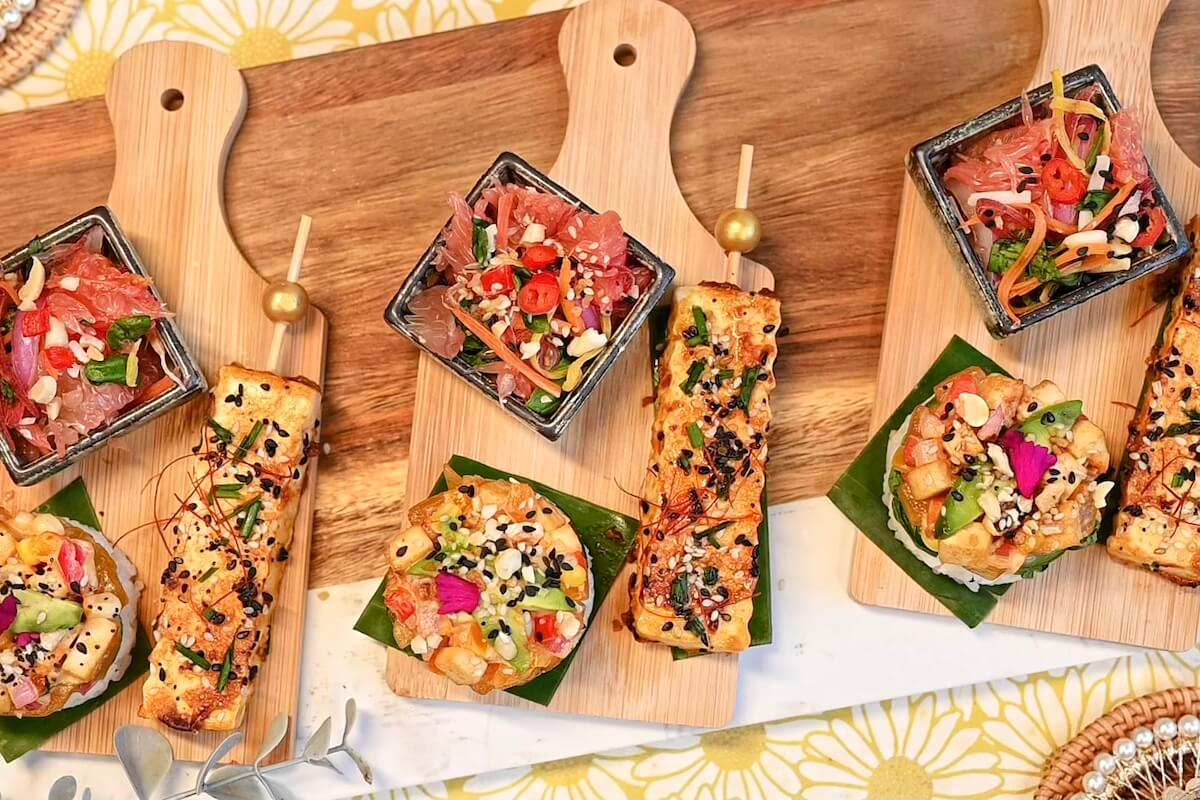
Give your festive entertaining a delicious twist with these Personal Asian Boards, featuring three colorful, flavorful Asian-inspired appetizers! From a refreshing Thai Pomelo & Grapefruit Salad to creamy Thai Paneer Satay Sticks and Mini Persimmon Sushi Bites, each element brings its own combination of flavors and textures to these individual grazing boards.
What makes these boards so special is how effortlessly everything comes together. The juicy citrus salad adds a refreshing sweet, tangy and spicy touch, the paneer satay brings rich Thai coconut curry flavors, and the mini sushi bites combine crispy tofu, crunchy vegetables and sweet seasonal persimmons.
WATCH HOW TO MAKE PERSONAL ASIAN BOARDS
Perfect for Diwali parties, card parties, festive gatherings or any occasion when you want to serve something a little different, these individual boards are easy to customize and make such an elegant presentation. Prepare the components ahead, arrange them on your favorite mini serving boards, and you have a fun, personalized appetizer that’s sure to impress your guests!
Back with my signature personal boards, and this time we're bringing together some irresistible Asian-inspired flavors! ❤️
Refreshing Thai Pomelo Salad with a honey-chili-lime dressing, flavorful Thai Paneer Satay Sticks in a creamy coconut curry marinade, and colorful Mini Persimmon Sushi Bites layered with crispy tofu, crunchy veggies and a delicious peanut sauce!
Three completely different bites, each bursting with flavors and textures, all arranged on individual mini boards for that extra-special touch! Perfect for festive gatherings, Diwali parties or your next celebration.
Prepare the Dressing: In a mixing bowl, whisk together all the honey-chili-lime dressing ingredients until well combined.
Prepare the Salad: Peel the pomelo and grapefruit, remove the membranes and separate them into bite-sized pieces.
Mix the Salad: Add the pomelo, grapefruit, shredded carrots, shallots, mint, Thai basil and grated coconut to the dressing. Toss lightly until everything is well coated.
Chill: Refrigerate the salad for 15–20 minutes while preparing the other appetizers.
Serve: Just before serving, garnish with roasted peanuts, cashews and toasted sesame seeds for that extra crunch.
Thai Paneer Satay:
Prepare the Paneer: Cut the paneer lengthwise into 6–8 thick sticks. Lightly score the surface with shallow diagonal cuts, without cutting all the way through.
Marinate: Whisk together coconut milk, Thai red curry paste, ginger-garlic paste, lemon juice, sugar, cornstarch, soy sauce, hot chili sauce and salt. Add the paneer sticks, coat well and refrigerate for at least 30 minutes.
Pan-Roast: Heat a nonstick skillet over medium heat. Arrange the paneer sticks and cook until lightly golden on both sides. Add some remaining marinade and simmer until cooked through, thickened and nicely coating the paneer.
Peanut Sauce: Whisk together all the dipping sauce ingredients, adding warm water as needed for a smooth consistency.
Serve: Garnish the paneer satay sticks with toasted sesame seeds and chives. Serve with peanut dipping sauce.
Mini Persimmon Sushi Bites:
Prepare the Sushi Rice: Mix the cooked sushi rice with salt, sugar, rice vinegar and furikake seasoning. Keep aside.
Prepare the Crispy Tofu: Toss the finely chopped tofu with soy sauce, sesame oil, hot sauce and cornstarch. Pan-fry in a nonstick skillet until golden and slightly crispy. Alternatively, air-fry at 350°F for 7–8 minutes.
Prepare the Filling: Mix the crispy tofu with onions, corn, carrots, bell peppers, mayonnaise and hot sauce until well combined.
Assemble the Sushi Bites: Place a small round mold directly on your serving board and press in a layer of seasoned sushi rice. Add finely chopped mint and cilantro, followed by sliced cucumber and finely chopped persimmons. Top with the tofu veggie filling.
Garnish and Serve: Finish with sliced avocado, furikake seasoning and sesame seeds. Carefully remove the mold and serve with peanut sauce. Soy sauce and wasabi can be served on the side, if desired.
Assembling the Personal Asian Boards:
Arrange one Mini Persimmon Sushi Bite directly on each individual wooden board, preferably over a small piece of banana leaf. Add a Thai Paneer Satay Stick alongside it, followed by a small bowl of chilled Thai Pomelo & Grapefruit Salad. Serve with peanut dipping sauce and finish with fresh herbs or sesame seeds for a colorful presentation.
Recipe Video
Nutrition Facts
Personal Asian Boards
Amount Per Serving
Calories 336Calories from Fat 162
% Daily Value*
Fat 18g28%
Saturated Fat 6g38%
Trans Fat 0.01g
Polyunsaturated Fat 4g
Monounsaturated Fat 7g
Cholesterol 1mg0%
Sodium 917mg40%
Potassium 518mg15%
Carbohydrates 37g12%
Fiber 6g25%
Sugar 14g16%
Protein 8g16%
Vitamin A 3416IU68%
Vitamin C 44mg53%
Calcium 66mg7%
Iron 2mg11%
* Percent Daily Values are based on a 2000 calorie diet.
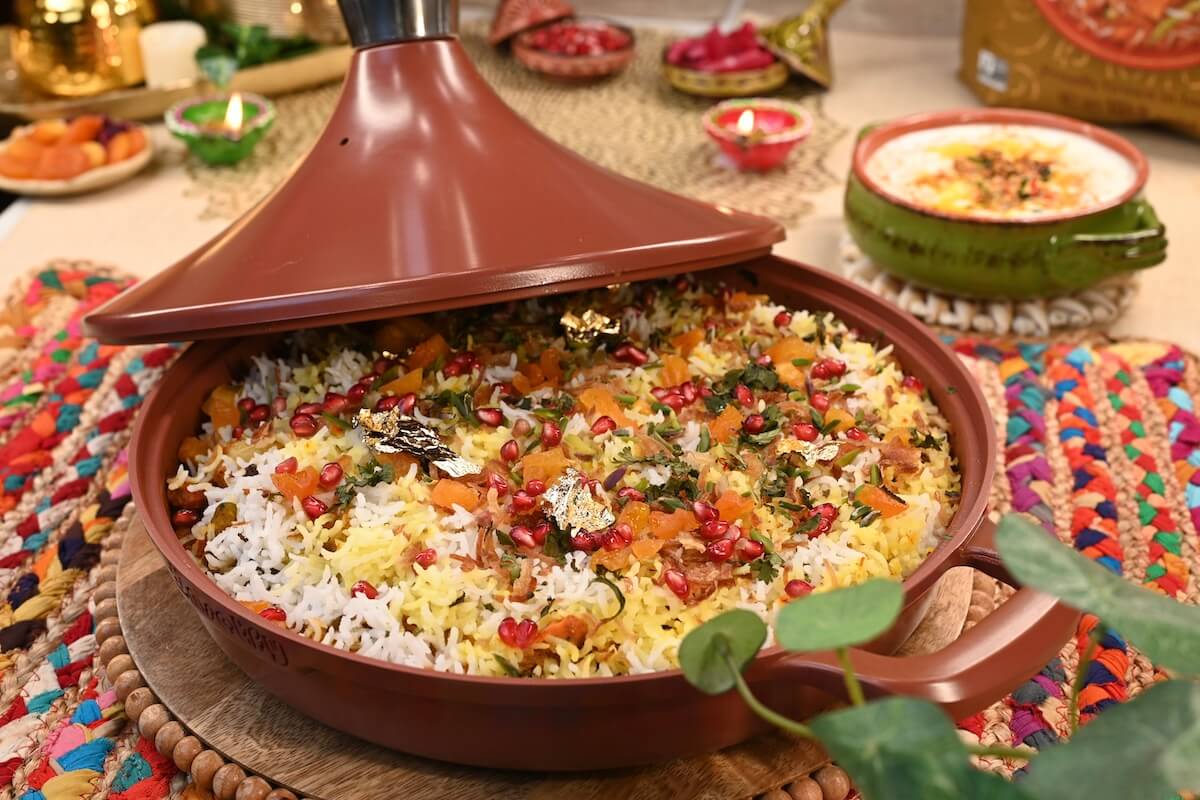
Saffron Apricot Tagine Biryani with Roasted Pumpkin Borani Raita — a stunning festive centerpiece featuring fragrant basmati rice layered with aromatic spiced vegetables, sweet apricots, saffron milk, rose water, crispy fried onions, and fresh herbs. Cooked on dum in a traditional tagine, every grain absorbs the wonderful flavors and aromas, creating a biryani that’s as beautiful to serve as it is delicious to enjoy!
Paired with a creamy Roasted Pumpkin Borani Raita, featuring lightly sautéed pumpkin, dried mint, and a flavorful golden garlic tadka, this combination is perfect for Diwali celebrations, festive gatherings, and special occasions!
WATCH HOW TO MAKE SAFFRON APRICOT TAGINE BIRYANI WITH ROASTED PUMPKIN BORANI RAITA:
The Roasted Pumpkin Borani Raita is acreamy, flavorful yogurt-based raita with finely chopped sautéed pumpkin, dried mint, and aromatic spices, finished with a golden garlic tadka. The pumpkin retains a slight crunch, adding a lovely contrast to the creamy yogurt and making this raita a perfect accompaniment to the fragrant tagine biryani!
Tips for the Perfect Tagine Biryani
Use extra long grain basmati rice.
Do not overcook the vegetables: Since they are already blanched or roasted, a short simmer is sufficient.
Cook rice only until 75–80% done: It will finish cooking during dum without becoming mushy.
Balance the flavors: Apricots add a delicate sweetness, while saffron, rose water, and fresh herbs bring wonderful fragrance.
Use a cooking-safe tagine: Ensure your tagine is suitable for stovetop cooking and follow the manufacturer’s heat instructions. Avoid high direct heat on ceramic tagines.
Keep the pumpkin slightly crunchy: This gives the borani raita its delicious texture.
Serve in the tagine: Garnish the biryani just before serving and bring the entire tagine to the table for a gorgeous festive presentation!
This Saffron Apricot Tagine Biryani with Roasted Pumpkin Borani Raita is a wonderful addition to your Diwali dinner menu, holiday gatherings, or special family celebrations. With its fragrant saffron rice, flavorful vegetable layers, sweet apricots, and cooling pumpkin raita, it’s a complete festive meal that’s sure to impress your guests!
Saffron Apricot Tagine Biryani with Roasted Pumpkin Borani Raita
Prep Time
30mins
Cook Time
30mins
A gorgeous festive centerpiece, bursting with beautiful colors, fragrant spices, and irresistible aromas! 💛
This stunning biryani brings together sweet apricots, fragrant saffron, delicate rose water, fresh mint, crispy fried onions, and aromatic spiced vegetables, all layered with basmati rice and slow-cooked on dum in a traditional tagine.
Served with a creamy Roasted Pumpkin Borani Raita, this is a stunning centerpiece for your Diwali table, bringing something truly special to your festive celebrations! ✨✨
Course:
Dinner, Lunch, Main Course
Cuisine:
Fusion, Indian
Keyword:
party
Custom Category:
Dinner, Diwali, Lunch, Main Course, Rice
Prepare Rice: Boil water with bay leaf, cinnamon, green and black cardamoms, cloves, lemon peel, and salt. Add soaked Royal Basmati Rice and cook until 75–80% done. Drain and keep aside.
Marinate Vegetables: In a bowl, mix yogurt, almond paste, ginger-green chili-garlic paste, fried onions, biryani masala, garam masala, turmeric, Kashmiri chili powder, coriander powder, black pepper, and salt. Add the prepared vegetables and chickpeas, coat well, and set aside for 15–20 minutes.
Prepare Tagine Masala: Heat ghee or oil in a stovetop-safe tagine. Add finely chopped onions and pearl onions and sauté until golden. Add the marinated vegetables, tomato paste, red chili powder, degi mirch, and turmeric. Mix well and adjust salt. Add 1 cup hot water, cover, and simmer for 7–8 minutes until the vegetables are cooked and the masala comes together.
Prepare Saffron Milk: Soak saffron in warm milk and mix in rose water.
Layer Biryani: Remove half the cooked vegetables from the tagine. Spread half the cooked rice over the remaining vegetables. Drizzle saffron milk and sprinkle chopped apricots, mint, cilantro, rose petals, and fried onions. Add the reserved vegetables, followed by the remaining rice, and repeat the toppings.
Dum Cooking: Cover the tagine and cook on very low heat for 10–15 minutes until the rice is fully cooked and the flavors come together. Let it rest, covered, for 5 minutes. Use a heat diffuser if required by your cooking-safe tagine.
Serve: Open the tagine and garnish with pomegranate pearls, fresh cilantro, mint, and edible gold leaf. Serve hot directly in the tagine with Roasted Pumpkin Borani Raita. Enjoy!
Roasted Pumpkin Borani Raita:
Heat 1 tsp oil in a pan over high heat. Add the finely chopped pumpkin and a little salt. Sauté until lightly cooked but still slightly crunchy. Do not overcook or let it become mushy. Set aside to cool.
Keep the pumpkin slightly crunchy for a lovely contrast with the creamy yogurt.
Whisk the yogurt until smooth. Add sugar, roasted cumin powder, dried mint leaves, black salt, red chili flakes, and salt. Mix well.
Fold in the cooled sautéed pumpkin and adjust the yogurt consistency if needed.
Heat 2 tsp oil in a small pan. Add finely minced garlic and sauté until golden brown. Add a pinch of turmeric powder, mix briefly, and pour the hot tadka over the raita.
Recipe Video
Recipe Notes
Use extra-long grain basmati rice
Do not overcook the vegetables: Since they are already blanched or roasted, a short simmer is sufficient.
Cook rice only until 75–80% done: It will finish cooking during dum without becoming mushy.
Balance the flavors: Apricots add a delicate sweetness, while saffron, rose water, and fresh herbs bring wonderful fragrance.
Use a cooking-safe tagine: Ensure your tagine is suitable for stovetop cooking and follow the manufacturer's heat instructions. Avoid high direct heat on ceramic tagines.
Keep the pumpkin slightly crunchy: This gives the borani raita its delicious texture.
Serve in the tagine: Garnish the biryani just before serving and bring the entire tagine to the table for a gorgeous festive presentation!
Nutrition Facts
Saffron Apricot Tagine Biryani with Roasted Pumpkin Borani Raita
Amount Per Serving
Calories 349Calories from Fat 81
% Daily Value*
Fat 9g14%
Saturated Fat 4g25%
Trans Fat 0.003g
Polyunsaturated Fat 1g
Monounsaturated Fat 3g
Cholesterol 15mg5%
Sodium 148mg6%
Potassium 552mg16%
Carbohydrates 61g20%
Fiber 6g25%
Sugar 11g12%
Protein 8g16%
Vitamin A 4327IU87%
Vitamin C 26mg32%
Calcium 101mg10%
Iron 2mg11%
* Percent Daily Values are based on a 2000 calorie diet.
A festive twist on Delhi’s famous street-style Matra Chaat, with butter-roasted pineapple, tangy chutneys, aromatic spices, and hot garlic masala kulchas!
There’s something about Delhi’s street food that brings back so many memories, especially those little roadside chaat stalls serving hot, spicy, and tangy matra chaat with freshly toasted kulchas. It’s one of those comforting flavors that never gets old!
WATCH HOW TO MAKE ROASTED PINEAPPLE TAWA MATRA CHAAT:
This Roasted Pineapple Tawa Matra Chaat brings a little something unexpected to the much-loved classic. We’ve added butter-roasted pineapple, which soaks up the spices and chutneys, adding a delicious contrast to the savory matra. The combination might sound unusual, but it works wonderfully!
What makes this recipe even more special is preparing and serving it right on a heavy-bottomed tawa. Once everything comes together, the tawa goes straight onto a traditional sigri, keeping the chaat warm while making an elegant centerpiece for the table.
Paired with hot, buttery Garlic Masala Kulchas, this is a wonderful appetizer for Diwali parties, festive gatherings, or whenever you’re craving a little taste of Delhi at home.
Tips for the Perfect Tawa Matra Chaat
Cook the matra until tender: The white peas should be completely cooked and soft, but still retain some texture. This gives the chaat its characteristic street-style consistency.
Use a potato ricer: Ricing the potatoes directly into the matra helps thicken the mixture without making it overly mashed or pasty.
Roast the pineapple until golden: Sautéing pineapple in butter enhances its natural sweetness and helps it blend beautifully with the spices and chutneys.
Adjust the chutneys to your taste: Some prefer their chaat extra tangy, while others enjoy a little more sweetness. Add green and tamarind chutneys as desired.
Add the fresh garnishes at the end: The grated vegetables, ginger juliennes, chilies, and herbs bring freshness, texture, and color to the finished chaat.
Serve it warm: A heavy-bottomed tawa helps retain heat, and placing it on a sigri makes the dish perfect for festive gatherings and interactive table serving. Use a heat-safe, stable setup and protect the table from the hot cookware.
Why You’ll Love This Recipe
This Roasted Pineapple Matra Chaat has everything we love about Delhi-style street food, with an unexpected touch that makes it feel extra special. The spicy matra, tangy chutneys, buttery pineapple, and fresh toppings create a wonderful combination of flavors and textures.
And when paired with hot garlic masala kulchas, it’s a festive dish that’s just as enjoyable to serve as it is to eat!
Whether you’re planning a Diwali dinner, hosting a festive chaat party, or simply looking for a different Indian street-food recipe, this is one you’ll want to make again and again.
A festive twist on Delhi's much-loved street-style Matra Chaat! Soft, flavorful white peas are cooked with aromatic spices on a tawa, combined with butter-roasted pineapple, tangy chutneys, and fresh, crunchy toppings. Served straight from the tawa with hot garlic masala kulchas, this is a wonderful addition to any festive spread.
Course:
Appetizer, Chaat
Cuisine:
Fusion, Indian
Keyword:
streetfood
Custom Category:
Appetizers, Chaat (Indian Street Food), Diwali
Wash the dried white peas and soak them overnight. Drain the soaking water.
Transfer the soaked matra to a pressure cooker along with 3 cups water, finely chopped onion, halved tomato, potatoes, salt, and turmeric powder.
Pressure-cook until the matra is completely tender.
Remove the boiled potatoes and keep them aside. Reserve the cooking liquid.
Prepare the Matra on the Tawa:
Heat ghee on a heavy-bottomed dosa tawa.
Add cumin seeds, hing, and dried red chilies. Allow them to sizzle.
Add finely chopped ginger and green chilies. Sauté until fragrant.
Add a splash of water and sauté the aromatics and spices for another minute or two.
Add the cooked matra and mix everything well.
Using a potato ricer, press the boiled potatoes directly into the matra. Mix until the potatoes blend into the chaat, giving it a thick consistency.
Add some reserved cooking liquid or water to adjust the consistency and let it simmer over low heat.
Butter-Roast the Pineapple:
Heat butter in a separate pan.
Add finely diced pineapple and sauté over medium-high heat until golden and lightly caramelized.
Reserve a little roasted pineapple for the final garnish.
Assemble the Matra Chaat:
Once the cooked matra and riced potatoes have simmered together and reached the desired consistency, keep the heat low.
Add the butter-roasted pineapple, reserving a little for garnishing.
Add the finely chopped onions and tomatoes.
Add green chutney and tamarind chutney as desired, followed by chaat masala, chana masala, roasted cumin powder, black salt, red chili powder, garam masala, and lemon juice.
Mix everything well so the pineapple, onions, tomatoes, chutneys, and spices come together. Adjust the seasoning and consistency as needed.
Finish with ginger juliennes, finely chopped green chilies, grated beetroot, grated carrots, grated radish, reserved roasted pineapple, and fresh cilantro or microgreens.
Place the tawa directly onto the sigri to keep the chaat warm and serve with freshly toasted garlic masala kulchas.
Prepare the Garlic Masala Kulchas:
Mix the very finely chopped garlic and cilantro stems together to make a flavorful garlic-herb mixture.
Heat a little butter or ghee on a roti tawa. Add some of the garlic-cilantro mixture and sprinkle a little kalonji. Sauté briefly until fragrant. Sprinkle red chili powder as needed.
Place a mini kulcha directly over the seasoned butter and press lightly so it absorbs the flavors.
Brush the other side with a little butter or ghee and toast until golden on both sides. Repeat with the remaining kulchas, distributing the garlic-cilantro mixture and kalonji evenly.
Serve:
Serve the Roasted Pineapple Tawa Matra Chaat hot, directly from the tawa placed on the sigri, with freshly toasted garlic masala kulchas, extra chutneys, yogurt or raita, and achar on the side.
Recipe Video
Recipe Notes
Reserve some of the butter-roasted pineapple for the very end. It adds a lovely finishing touch to the colorful chaat and makes the pineapple element stand out in the presentation.
Nutrition Facts
Roasted Pineapple Tawa Matra Chaat
Amount Per Serving
Calories 289Calories from Fat 27
% Daily Value*
Fat 3g5%
Saturated Fat 1g6%
Trans Fat 0.1g
Polyunsaturated Fat 1g
Monounsaturated Fat 1g
Cholesterol 5mg2%
Sodium 873mg38%
Potassium 1167mg33%
Carbohydrates 54g18%
Fiber 11g46%
Sugar 6g7%
Protein 14g28%
Vitamin A 577IU12%
Vitamin C 36mg44%
Calcium 110mg11%
Iron 4mg22%
* Percent Daily Values are based on a 2000 calorie diet.
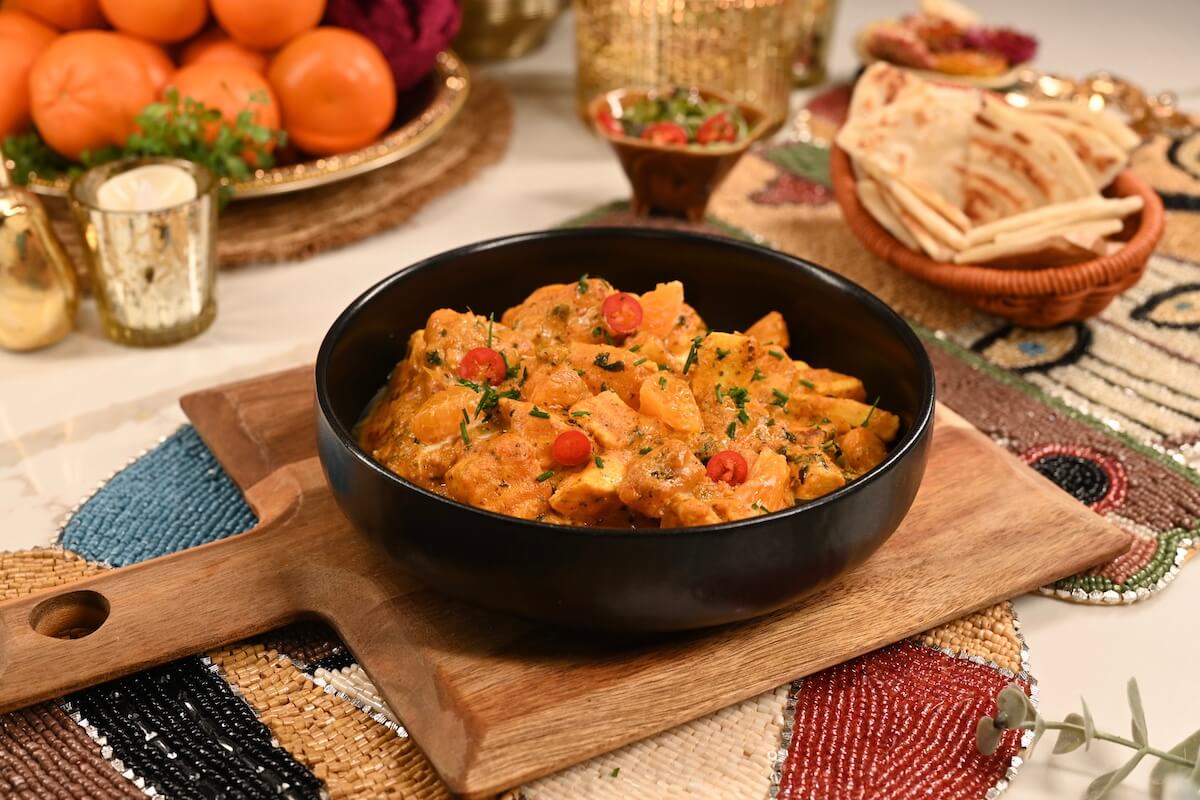
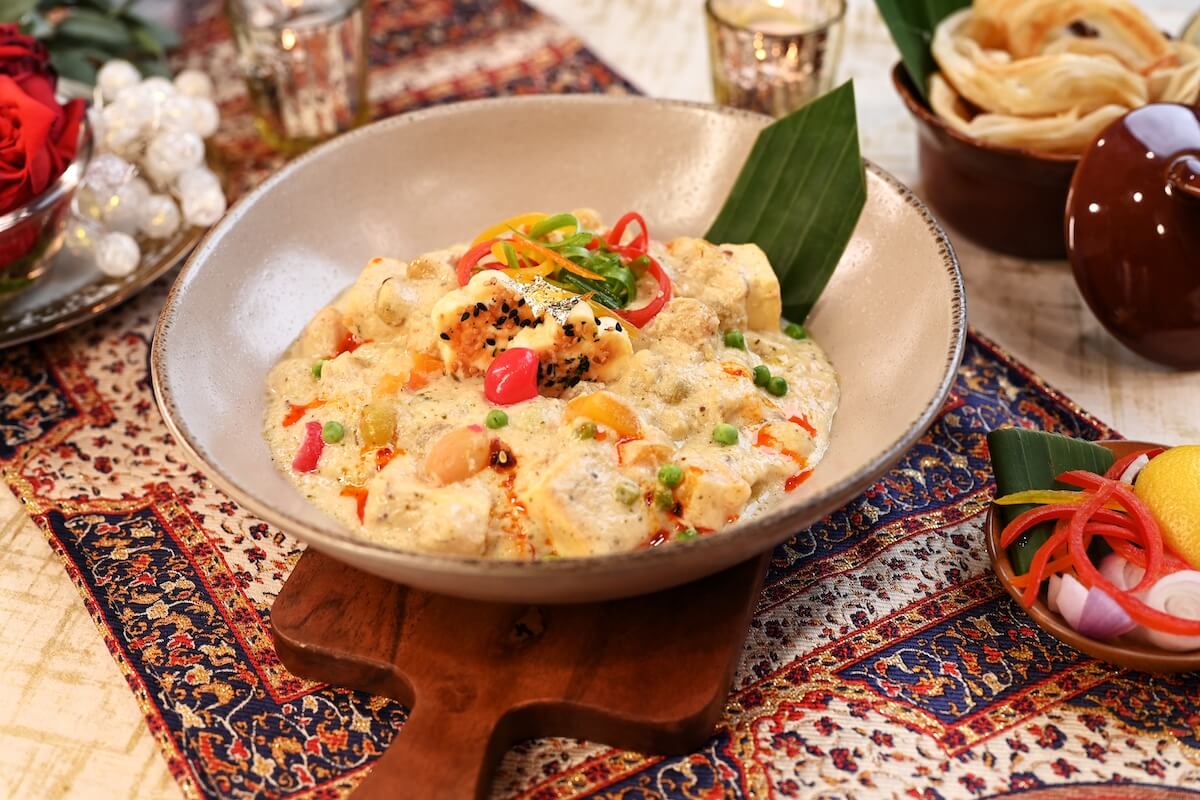
Makhmali Orange Paneer ✨ A rich, velvety paneer curry with a refreshing citrusy twist!
Paneer is always a favorite, but this Makhmali Orange Paneer brings something a little unexpected to the table! Soft paneer cubes, fresh juicy oranges, and a creamy, aromatic gravy come together in a dish that’s as delightful to eat as it is to serve.
WATCH HOW TO MAKE MAKHMALI ORANGE PANEER:
What makes this recipe special is the contrast of flavors and textures. The base is a luscious onion-tomato gravy enriched with cashews, yogurt, and warming Indian spices. Separately sautéed onions, green bell peppers, and tender cilantro stems add a lovely bite, while fresh orange segments bring a refreshing sweetness and citrusy brightness.
It’s an elegant twist on a familiar favorite, perfect for festive gatherings, dinner parties, or whenever you want to serve something a little different.
Tips for the Perfect Makhmali Orange Paneer
Prepare the gravy ahead: One of the best things about this recipe is that the gravy base can be prepared a day or two in advance. Refrigerate it in an airtight container and finish the paneer just before serving.
Don’t overcook the vegetables: Finely chopped onions, bell peppers, and cilantro stems add a wonderful contrast to the silky gravy. A quick sauté is all they need.
Add the oranges last: Fresh orange segments are the highlight of this dish. Folding them in at the end preserves their citrusy freshness and prevents them from becoming mushy or bitter.
Adjust the consistency: The gravy should be creamy and coating, neither too thick nor too thin. Add a little water while simmering if needed.
Serving Suggestions
Makhmali Orange Paneer pairs beautifully with butter naan, lachha paratha, or soft phulkas. Serve it as part of an elaborate Indian dinner menu alongside a fragrant pulao, dal, and fresh salad.
The vibrant orange gravy and fresh citrus segments make it an especially stunning centerpiece for festive occasions.
Make-Ahead and Storage
The gravy base can be refrigerated for up to 2 days or frozen for longer storage. On the day of serving, reheat it thoroughly and prepare the paneer with freshly sautéed aromatics.
For the best texture, add the orange segments only when you’re ready to serve. Store any leftovers promptly in the refrigerator and consume within 3–4 days.
If you love paneer but are looking for something beyond the usual curries, this Makhmali Orange Paneer is a lovely recipe to try. Creamy, aromatic, with a refreshing citrusy finish, it brings a special touch to any festive spread!
Makhmali Orange Paneer – A rich, velvety paneer curry with a refreshing citrusy twist!
Paneer is always a favorite, but this Makhmali Orange Paneer brings something a little unexpected to the table! Soft paneer cubes, fresh juicy oranges, and a creamy, aromatic gravy come together in a dish that’s as delightful to eat as it is to serve.
Course:
Dinner, Lunch, Main Course
Cuisine:
Fusion, Indian
Keyword:
party
Custom Category:
Curries, Dinner, Diwali, Indian Main Course, Lunch, Main Course
Servings: 6
Calories: 330kcal
Author: Nidhi Bothra
Ingredients
2mediumoranges, peeled, deseeded, and separated into segments
Sauté the whole spices: Heat 1 tbsp oil in a heavy-bottomed pan. Add the cinnamon stick, green cardamoms, black cardamom, cloves, black peppercorns, and bay leaf. Sauté briefly until aromatic.
Cook the onions and aromatics: Add roughly chopped onions, green chilies, garlic cloves, and ginger. Sauté on medium heat until the onions turn translucent. We want to sweat the onions nicely without browning them.
Add cashews and tomatoes: Add the cashews, followed by chopped tomatoes and salt. Mix well and cook until the tomatoes soften and begin releasing their moisture.
Add yogurt and spices: Lower the heat and add the beaten yogurt, coriander powder, turmeric powder, and Kashmiri red chili powder. Mix well and continue cooking until the masala is nicely roasted and the oil starts to separate.
Simmer the masala: Add 1 cup water, cover, and cook on medium-low heat until the ingredients soften completely and the oil begins separating again.
Blend the gravy: Allow the mixture to cool slightly. Remove the cinnamon stick, bay leaf, and black cardamom. Keep the green cardamoms in the mixture and blend everything into a smooth, velvety gravy. Adjust the consistency with a little water if needed.
Finish the gravy base: Return the blended gravy to the pan and simmer on medium-low heat for 5–10 minutes. Our rich, creamy gravy base is ready!
Prepare the Paneer:
Sauté the aromatics: In another pan, heat 2 tsp mustard oil until hot, then lower the heat and add 2 tbsp butter. The mustard oil adds a lovely depth of flavor to our rich, velvety gravy. Add the finely minced ginger-green chili-garlic mixture and sauté briefly until aromatic.
Add the vegetables: Add finely chopped onions, green bell peppers, and tender cilantro stems. Sauté for 2–3 minutes until the vegetables soften slightly while retaining a little bite. This adds a lovely contrast to the smooth, velvety gravy.
Add paneer and spices: Add paneer cubes, turmeric powder, regular red chili powder, and degi mirch. Mix well and sauté for 1–2 minutes until the paneer is nicely coated with the spices.
Combine with the gravy: Pour in the prepared gravy and mix lightly, allowing the paneer to absorb all those wonderful flavors.
Add finishing seasonings: Add crushed kasoori methi, garam masala, and sugar. Taste and adjust the salt and sugar as needed to balance the flavors. Mix well and let everything come together over low heat.
Finish with cream: Add fresh cream and mix lightly until the gravy becomes rich and silky.
Fold in the oranges: Finally, add the fresh orange segments and fold them lightly into the gravy. Avoid overcooking, as we want the oranges to retain their freshness, shape, and natural citrusy sweetness.
Serve: Transfer to a serving bowl, garnish with fresh cilantro and orange segments, and serve warm with naan, lachha paratha, or roti.
Recipe Video
Recipe Notes
Prepare the gravy ahead: The gravy base can be prepared 2–3 days in advance. Cool it promptly and store in an airtight container in the refrigerator. When ready to use, reheat thoroughly and simmer for 5–10 minutes before combining with the paneer.
Perfect for party preparation: You can prepare the complete paneer gravy a day ahead, leaving out the fresh oranges. When ready to serve, reheat the gravy with paneer thoroughly, fold in the fresh orange segments, and warm for just another minute. Your dish is ready without any last-minute hassle!
Keep a little texture: The finely chopped onions, green bell peppers, and cilantro stems are sautéed separately to give a lovely bite to the creamy gravy. Avoid overcooking them.
Add oranges at the very end: Fresh oranges are the highlight of this recipe. Fold them in lightly just before serving so they retain their beautiful texture and refreshing citrus flavor.
Adjust the gravy consistency: The gravy should be smooth, rich, and coating. Add a little warm water while simmering if it becomes too thick.
Balance the flavors: Adjust the salt and sugar at the end according to the natural sweetness and tartness of your oranges. We want a lovely balance without making the gravy overly sweet.
Choose sweet, juicy oranges: Use fresh, sweet oranges with minimal seeds and pith. Remove the seeds and excess white membrane so the orange segments blend beautifully with the gravy.
Nutrition Facts
Makhmali Orange Paneer
Amount Per Serving
Calories 330Calories from Fat 207
% Daily Value*
Fat 23g35%
Saturated Fat 11g69%
Trans Fat 0.2g
Polyunsaturated Fat 2g
Monounsaturated Fat 5g
Cholesterol 48mg16%
Sodium 157mg7%
Potassium 534mg15%
Carbohydrates 24g8%
Fiber 5g21%
Sugar 13g14%
Protein 10g20%
Vitamin A 1248IU25%
Vitamin C 49mg59%
Calcium 305mg31%
Iron 1mg6%
* Percent Daily Values are based on a 2000 calorie diet.
This Mughlai Cocktail Fruit Paneer brings a touch of royalty to your festive table. Paneer cubes, roasted makhana, peas, and colorful cocktail fruits come together in a velvety onion-cashew-melon seed gravy that’s flavored with whole spices and finished with milk — no cream needed.
It’s that perfect balance of rich yet light, traditional yet fun — a quick show-stopper for your Diwali dinner spread. ✨
Mughlai Cocktail Fruit Paneer is a rich, creamy, and flavorful sabji that brings a royal touch to any festive table! Soft paneer, sweet cocktail fruits, roasted makhana, and green peas come together in a silky Mughlai-style white gravy, creating a lovely balance of sweet and savory flavors.
The gravy gets its richness from cashews, melon seeds, yogurt, and milk powder or mawa, without using any cream. It is an elegant yet easy dish to prepare for Diwali parties, festive dinners, or special occasions. Serve it with lachha paratha or naan for a delicious meal!
Course:
Dinner, Main Course
Cuisine:
Indian
Keyword:
party
Custom Category:
Curries, Dinner, Diwali, Indian Main Course, Main Course
Servings: 4
Calories: 373kcal
Author: Nidhi Bothra
Ingredients
For The Base:
1 1/2-2tspghee
3mediumonions, sliced
1inchginger
4green chilies
4clovesgarlic
10cashews
1tbspmelon seeds (magaz)
smallbundlecilantro with stems, tied together
1/2cuphot water
Whole Spices:
1bay leaves
1bigblack cardamom
2green cardamoms
1smallcinnamon sticks
2cloves
To Blend:
3tbspyogurt
2tbspfull fat whole milk powder, or 1/4 cup mawa for extra richness
Heat 1½–2 tsp ghee in a pan. Add the bay leaf, black cardamom, green cardamoms, cinnamon stick, and cloves. Let the whole spices sizzle for a few seconds until aromatic.
Add the sliced onions, ginger, green chilies, and garlic. Sauté lightly for 1–2 minutes. The onions should soften slightly but should not turn brown.
Add the cashews and melon seeds and sauté for another minute.
Pour in ½ cup hot water and add the tied cilantro bundle. Cover and cook for 8–10 minutes, until the onions and other ingredients are soft.
Remove the bay leaf, black cardamom, cinnamon stick, and cilantro bundle. Leave the green cardamoms and cloves in the mixture. Allow it to cool slightly.
Transfer the mixture to a blender. Add yogurt and milk powder, and blend until completely smooth and silky. You can also use mawa instead of milk powder.
Heat 2½ tbsp ghee or oil in a pan. Add shah jeera and let it sizzle. Pour in the blended gravy along with ½ cup water.
Add kasuri methi, black pepper powder, coriander powder, sugar, and salt. Mix well, cover, and cook until the gravy thickens slightly and the oil begins to separate.
Add the lightly sautéed paneer cubes, followed by the drained fruit cocktail, roasted makhana, and green peas. Mix everything into the gravy.
Pour in the milk to adjust the consistency, then add garam masala. Simmer for another 2–3 minutes until everything comes together beautifully.
Transfer to a serving bowl and garnish with paneer pieces, colorful bell peppers, and a drizzle of chili oil.
Serve hot with lachha paratha or naan, and a simple salad on the side for a royal Diwali touch.
Recipe Video
Recipe Notes
Do not brown the onions. Lightly sautéing them helps maintain the creamy white color of the Mughlai gravy.
Milk powder or mawa: Both work beautifully to add richness. Use 3 tbsp milk powder or ¼ cup mawa, depending on what you have available.
No cream needed: Cashews, melon seeds, yogurt, and milk powder or mawa create a naturally rich and silky gravy.
Adjust the milk: Add up to 1 cup milk, or as needed, depending on your preferred gravy consistency.
Drain the fruit cocktail: Remove the syrup before adding the fruits so the gravy does not become overly sweet.
Avoid overcooking the paneer: Once the paneer and fruits are added, simmer briefly to keep the paneer soft and the fruits intact.
Nutrition Facts
Mughlai Cocktail Fruit Paneer
Amount Per Serving
Calories 373Calories from Fat 234
% Daily Value*
Fat 26g40%
Saturated Fat 15g94%
Trans Fat 0.03g
Polyunsaturated Fat 0.5g
Monounsaturated Fat 2g
Cholesterol 65mg22%
Sodium 209mg9%
Potassium 287mg8%
Carbohydrates 20g7%
Fiber 4g17%
Sugar 9g10%
Protein 16g32%
Vitamin A 126IU3%
Vitamin C 17mg21%
Calcium 514mg51%
Iron 1mg6%
* Percent Daily Values are based on a 2000 calorie diet.
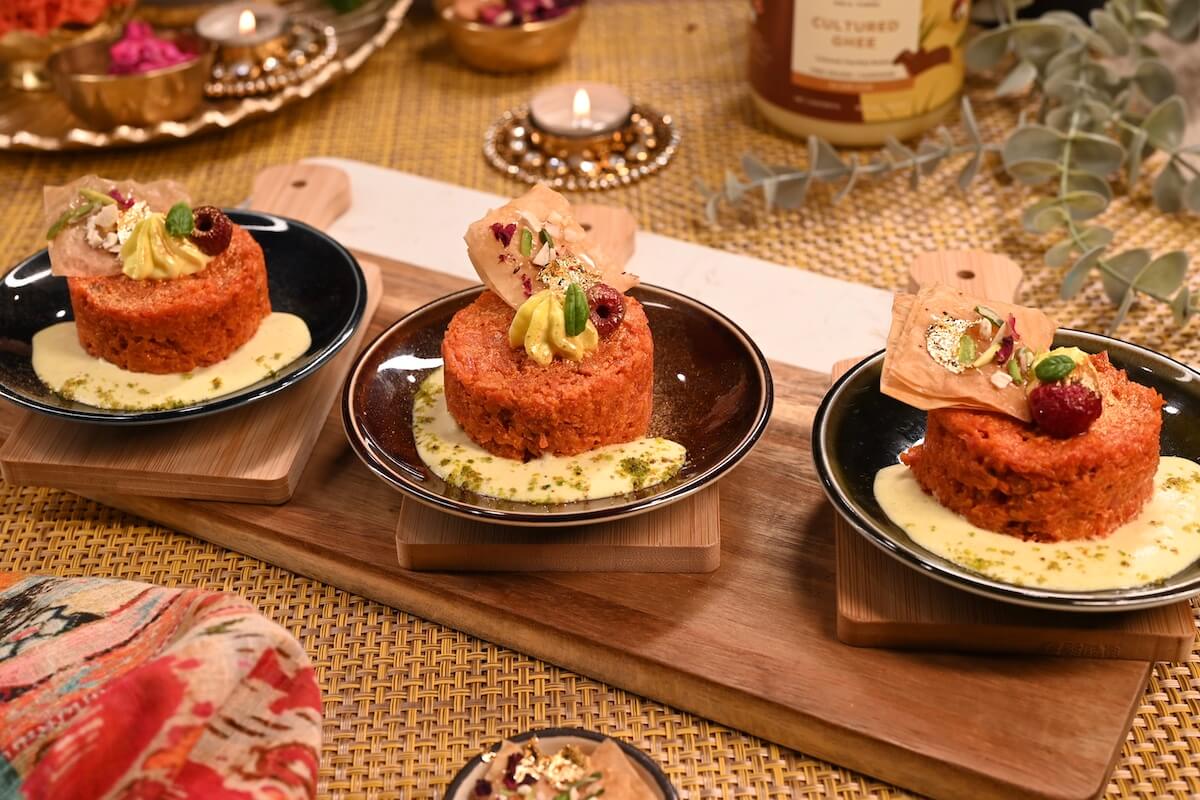
Gajar Halwa with Pistachio Mascarpone Cream & Crispy Phyllo — a rich, creamy Indian carrot halwa made with ghee, milk, saffron, cardamom, and roasted nuts, paired with chilled pistachio mascarpone cream and delicate, golden phyllo pastry! With a beautiful contrast of warm halwa, silky cream, and buttery crunch, this is a lovely way to serve a traditional favorite with an elegant touch!
WATCH HOW TO MAKE GAJAR KA HALWA WITH PISTACHIO MASACARPONE CREAM:
Gajar Halwa has always been one of those desserts that brings back the warmth of celebrations and family gatherings. Slowly cooked carrots, the aroma of ghee, saffron, and cardamom, and that rich, comforting texture make it a timeless favorite.
For this version, I wanted to keep everything we love about traditional Gajar Halwa while giving it a beautiful presentation. The real magic happens when we pair the warm halwa with chilled pistachio mascarpone cream and a delicate, crispy phyllo pastry. A little raspberry, edible gold, and a sprinkle of nuts bring everything together into a dessert that looks just as beautiful as it tastes!
Why You’ll Love This Recipe
A traditional favorite with an elegant touch: All the familiar flavors of homemade Gajar Halwa, presented beautifully.
Rich and creamy: Slowly simmered carrots, milk, and ghee create a luscious halwa without making it overly dry.
A beautiful contrast of textures: Warm, creamy halwa, chilled pistachio mascarpone, and crispy phyllo in every bite.
Perfect for entertaining: The halwa and cream can be prepared ahead of time, making the final plating quick and easy.
Beautiful presentation: The vibrant carrot halwa, pale green pistachio cream, fresh raspberry, and golden phyllo make a stunning combination.
Serving Suggestions
I love serving this Gajar Halwa slightly warm, with the chilled pistachio mascarpone cream spooned around it. The contrast between the warm halwa and cool cream makes every bite extra delicious.
For a festive presentation, shape the halwa using a round mold and finish with a raspberry, edible gold, and a crisp phyllo shard. You can also serve it in individual dessert bowls or small glasses for parties and gatherings.
Make Ahead & Storage
The Gajar Halwa can be made 2–3 days ahead and refrigerated in an airtight container. Reheat gently on the stovetop or in the microwave, adding a splash of milk if needed to loosen the consistency.
The pistachio mascarpone cream can be prepared a day ahead and stored in the refrigerator. Give it a good stir before serving and adjust with a little milk if it has thickened.
The crispy phyllo pastry is best prepared fresh, but it can be baked a day ahead and stored in an airtight container at room temperature once completely cooled.
For the best presentation, assemble everything just before serving so the halwa stays warm, the cream chilled, and the phyllo beautifully crisp.
Gajar Ka Halwa with Pistachio Mascarpone Cream & Crispy Phyllo
Prep Time
20mins
Cook Time
40mins
Gajar Halwa with Pistachio Mascarpone Cream & Crispy Phyllo — a rich, creamy Indian carrot halwa made with ghee, milk, saffron, cardamom, and roasted nuts, paired with chilled pistachio mascarpone cream and delicate, golden phyllo pastry! With a beautiful contrast of warm halwa, silky cream, and buttery crunch, this is a lovely way to serve a traditional favorite with an elegant touch!
Course:
Dessert
Cuisine:
Fusion, Indian
Keyword:
mithai
Custom Category:
Desserts, Diwali, Indian Sweets
Servings: 8
Calories: 275kcal
Author: Nidhi Bothra
Ingredients
Gajar Halwa:
4cupscarrots, freshly grated, approx 500 g
3cupswhole milk
2tbspghee
1/4cupcondensed milk
1/4cupsugar, adjust to taste
1/2tspcardamom powder
7-8strandssaffron, soaked in 1 tbsp warm water
2tbspmixed nuts, almonds, cashews, and pistachios, finely chopped
Wash, peel, and grate the carrots using the large holes of a box grater.
Heat 1 tbsp ghee in a heavy-bottomed pan over medium heat. Add the grated carrots and sauté for 6–8 minutes until they soften slightly, release their aroma, and develop a beautiful bright reddish-orange color.
Add the milk and mix well. Let the carrots simmer over medium heat, stirring occasionally, until they become soft and tender and most of the milk has evaporated. This should take approximately 25–35 minutes.
Once the milk has reduced and the carrots start coming together, add the condensed milk, followed by the sugar. Mix well and continue cooking until the halwa becomes rich and creamy. Keep it slightly moist, as it will continue to thicken while cooling.
In a separate small pan, heat 1 tsp ghee and roast the chopped almonds, cashews, and pistachios until lightly golden and fragrant.
Add the roasted nuts, cardamom powder, and saffron-infused water to the halwa. Mix everything together until well combined.
Finish with the remaining 1 tbsp ghee and cook for another minute until the halwa becomes glossy and aromatic. Turn off the heat and keep aside.
Pistachio Mascarpone Cream:
In a mixing bowl, whisk the mascarpone cheese and heavy whipping cream until smooth and creamy.
Add the powdered pistachios, saffron-infused milk, cardamom powder, powdered sugar, and a pinch of salt. Mix everything together.
Gradually add the milk, whisking until you get a smooth, silky consistency. Adjust the quantity of milk depending on how thick or pourable you want the cream.
Reserve a small portion of the thicker cream for topping the halwa. Add a little more milk to the remaining cream to make it slightly pourable for plating.
Refrigerate until chilled and ready to serve.
Crispy Phyllo Pastry:
Preheat the oven to 350°F (175°C). Line a baking tray with parchment paper.
Arrange the phyllo pastry sheets on a clean surface and brush lightly with melted butter. Fold or layer them into your desired shape.
Place them on the prepared baking tray and bake for approximately 8–12 minutes, until golden brown and crispy.
Remove from the oven and let them cool slightly. Brush lightly with honey, then sprinkle with finely chopped nuts, dried rose petals, and edible gold foil.
Let the pastry cool completely until crisp.
Plating and Serving
Place a round mold on a serving plate and fill it with the warm Gajar Halwa. Press lightly to create a neat shape, then carefully remove the mold.
Place a raspberry on top, followed by a small dollop of the thicker pistachio mascarpone cream. Garnish with a little edible gold.
Spoon the chilled, pourable pistachio mascarpone cream around the halwa in a semicircle.
Finish with a piece of crispy golden phyllo pastry on top, adding a beautiful crunch to every bite.
Serve immediately and enjoy!
Recipe Video
Recipe Notes
Use freshly grated carrots: Use freshly grated carrots for the best texture and flavor.
Don't rush the cooking: Let the carrots simmer slowly in the milk until tender. This helps develop that classic, rich Gajar Halwa flavor. The combination of condensed milk and sugar adds sweetness without overpowering the carrots.
Use good-quality ghee: Ghee plays an important role in the flavor of the halwa.
Keep the halwa slightly moist: Don't cook it completely dry, as it will continue to thicken once it cools. A creamy consistency also makes it easier to shape for plating.
Adjust the cream consistency: Adjust the milk in the pistachio mascarpone cream depending on your preferred consistency. Keep a little mascarpone cream thick for topping the halwa and make the rest slightly pourable with milk for serving around it.
Serving: For the best contrast, serve the halwa slightly warm with chilled pistachio cream.
Add the phyllo just before serving: This keeps it beautifully crisp and provides the perfect contrast to the soft halwa and silky cream.
Nutrition Facts
Gajar Ka Halwa with Pistachio Mascarpone Cream & Crispy Phyllo
Amount Per Serving
Calories 275Calories from Fat 135
% Daily Value*
Fat 15g23%
Saturated Fat 8g50%
Polyunsaturated Fat 1g
Monounsaturated Fat 4g
Cholesterol 38mg13%
Sodium 124mg5%
Potassium 467mg13%
Carbohydrates 30g10%
Fiber 2g8%
Sugar 22g24%
Protein 6g12%
Vitamin A 11056IU221%
Vitamin C 6mg7%
Calcium 187mg19%
Iron 1mg6%
* Percent Daily Values are based on a 2000 calorie diet.
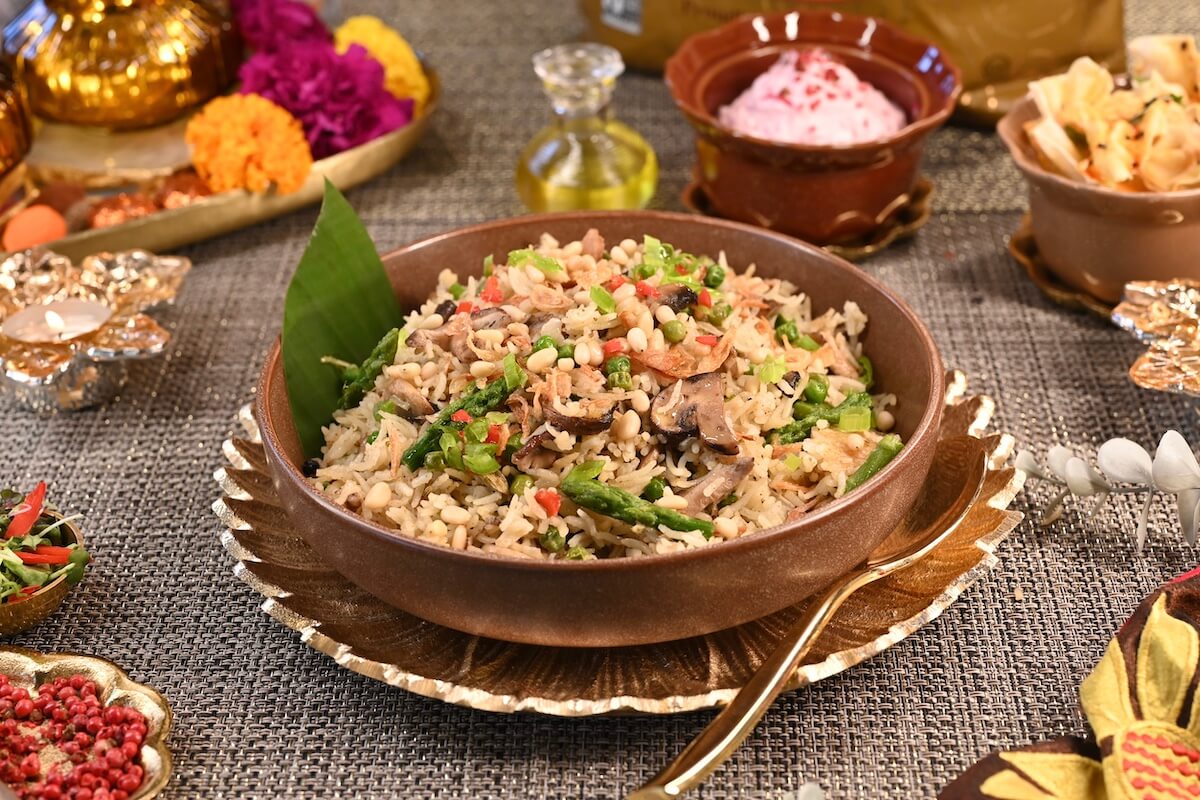
Wild Mushroom Kashmiri Pulao with Pink Peppercorn Raita — a fragrant, earthy pulao with a medley of mushrooms, aromatic Kashmiri spices, and fluffy basmati rice, finished with crispy birista onions, toasted pine nuts, and a drizzle of truffle oil. Served with a beautiful pink peppercorn raita, this is an elegant, restaurant-inspired dish that’s perfect for festive gatherings.
WATCH HOW TO MAKE WILD MUSHROOM KASHMIRI PULAO:
Who says a pulao has to be simple? Sometimes, a few thoughtful additions can turn an everyday dish into something truly special. This Wild Mushroom Kashmiri Pulao is one of those recipes that feels comforting and familiar, yet has all the elegance of a beautifully plated restaurant dish.
The combination of mushrooms, warm spices, and fragrant basmati rice creates a lovely depth of flavor. But what makes this pulao stand out is how the finishing touches bring everything together. Crispy birista onions add that irresistible crunch, toasted pine nuts bring a delicate nuttiness, and a drizzle of truffle oil enhances the earthy, umami-rich flavors of the mushrooms.
To balance the richness, I’ve paired it with a refreshing Pink Peppercorn Raita. The beautiful natural pink color comes from grated pink radish, while lightly crushed pink peppercorns add a delicate, peppery note. It’s simple to prepare and complements the pulao beautifully.
Whether you’re hosting a festive gathering or planning a special dinner at home, this pulao makes a stunning centerpiece for your table.
What Makes This Pulao Special?
A beautiful medley of mushrooms: Shiitake, oyster, cremini, and button mushrooms bring different textures and earthy flavors. Sautéing them over high heat helps them develop a lovely golden color without becoming soggy.
Fragrant Kashmiri-inspired spices: Shah jeera, fennel, dry ginger, and whole spices give the basmati rice a delicate warmth and beautiful aroma without overpowering the mushrooms.
The finishing touches: This is where the pulao really comes together! Crispy birista onions, toasted pine nuts, and truffle oil add layers of texture and flavor that make every bite a little more special.
A refreshing pink peppercorn raita: Creamy yogurt, grated pink radish, and lightly crushed pink peppercorns create a refreshing accompaniment that balances the rich, earthy flavors of the pulao.
Wild Mushroom Kashmiri Pulao with Pink Peppercorn Raita
Prep Time
15mins
Cook Time
30mins
This Wild Mushroom Kashmiri Pulao is a beautiful combination of warm, earthy flavors and fragrant basmati rice, perfect for making festive gatherings a little more special. A medley of mushrooms, green peas, and asparagus comes together with aromatic whole spices, fennel, and dry ginger, giving the pulao a lovely depth of flavor.
What really makes this pulao special are the finishing touches. Crispy birista onions add a beautiful crunch, toasted pine nuts bring a delicate nuttiness, and a drizzle of truffle oil enhances those rich, earthy mushroom flavors. Served with a refreshing Pink Peppercorn Raita, it's an elegant, restaurant-inspired dish that's perfect for your festive table.
Course:
Dinner, Lunch, Main Course
Cuisine:
Fusion, Indian
Keyword:
festive
Custom Category:
Dinner, Diwali, Indian Main Course, Lunch, Main Course, Rice
Servings: 6
Calories: 278kcal
Author: Nidhi Bothra
Ingredients
Wild Mushroom Kashmiri Pulao:
1 1/2cupsbasmati rice, washed and soaked for 10 minutes
2cupsmushrooms, mixed shiitake, oyster, cremini, and button mushrooms, cleaned and sliced
1/2cuppeas
1/2cupasparagus, cut into 1 cm pieces and lightly blanched
Wash the basmati rice until the water runs mostly clear. Soak for 10 minutes, then drain and keep aside.
Heat butter in a wide pan over high heat. Add the mixed mushrooms and sauté until golden and their moisture has evaporated, about 5 minutes. Make sure not to overcook the mushrooms, as they should retain their texture.
Add the green peas and lightly blanched asparagus. Toss everything together on high heat for another 1–2 minutes, making sure the asparagus retains its vibrant green color and slight crunch. Switch off the heat and keep aside.
In a heavy-bottomed pan, heat ghee and add all the whole spices. Let the spices release their aroma.
Add finely chopped onions, followed by ginger and green chilies. Add garlic if using. Sauté over medium heat until the onions turn nicely golden.
Lower the heat slightly and add the beaten yogurt, stirring continuously. Add coarsely crushed fennel seeds, dry ginger powder, and salt. Continue sautéing until the masala comes together and the ghee begins to separate.
Add the drained basmati rice and gently fold it into the masala without breaking the grains. Pour in hot water as required, adjust the salt, and cover. Cook over medium-low heat until the rice is about 80% done.
Add the sautéed mushrooms, peas, and asparagus, followed by garam masala. Fold gently, cover again, and let the rice finish cooking until fluffy and fragrant. Switch off the heat and let it rest, covered, for 5 minutes.
Transfer the pulao to a serving dish. Garnish with crispy birista onions, toasted pine nuts, finely chopped chives, and red chilies. Finish with a drizzle of truffle oil and a little truffle dust, if using.
Pink Peppercorn Raita:
Sprinkle a little salt over the grated pink radish and microwave for 20–30 seconds to soften slightly. Let it cool, then gently squeeze out the excess moisture.
Whisk the thick yogurt until smooth. Add the grated radish, lightly crushed pink peppercorns, a touch of sugar, and salt to taste. Mix everything together until well combined.
Serve the Wild Mushroom Kashmiri Pulao with refreshing Pink Peppercorn Raita.
Recipe Video
Recipe Notes
Mushrooms: A combination of shiitake, oyster, cremini, and button mushrooms gives the pulao a lovely variety of earthy flavors and textures. Morel or gucchi mushrooms are not required.
Sautéing mushrooms: Keep the heat high so the mushrooms develop a beautiful golden color without becoming soggy.
Asparagus: Blanch only briefly to preserve its vibrant green color and delicate crunch.
Rice: Fold gently and avoid excessive stirring to keep the basmati grains long and separate.
Spices: Biryani masala can be used instead of garam masala if preferred.
Truffle oil: Add it only at the end, just before serving, to preserve its distinctive aroma.
Pine nuts and birista onions: Add them just before serving so they retain their crunch.
Pink peppercorns: Lightly crush them to release their delicate flavor without overpowering the raita.
Nutrition Facts
Wild Mushroom Kashmiri Pulao with Pink Peppercorn Raita
Amount Per Serving
Calories 278Calories from Fat 54
% Daily Value*
Fat 6g9%
Saturated Fat 3g19%
Trans Fat 0.1g
Polyunsaturated Fat 0.4g
Monounsaturated Fat 2g
Cholesterol 14mg5%
Sodium 68mg3%
Potassium 410mg12%
Carbohydrates 48g16%
Fiber 3g13%
Sugar 6g7%
Protein 9g18%
Vitamin A 271IU5%
Vitamin C 10mg12%
Calcium 145mg15%
Iron 2mg11%
* Percent Daily Values are based on a 2000 calorie diet.
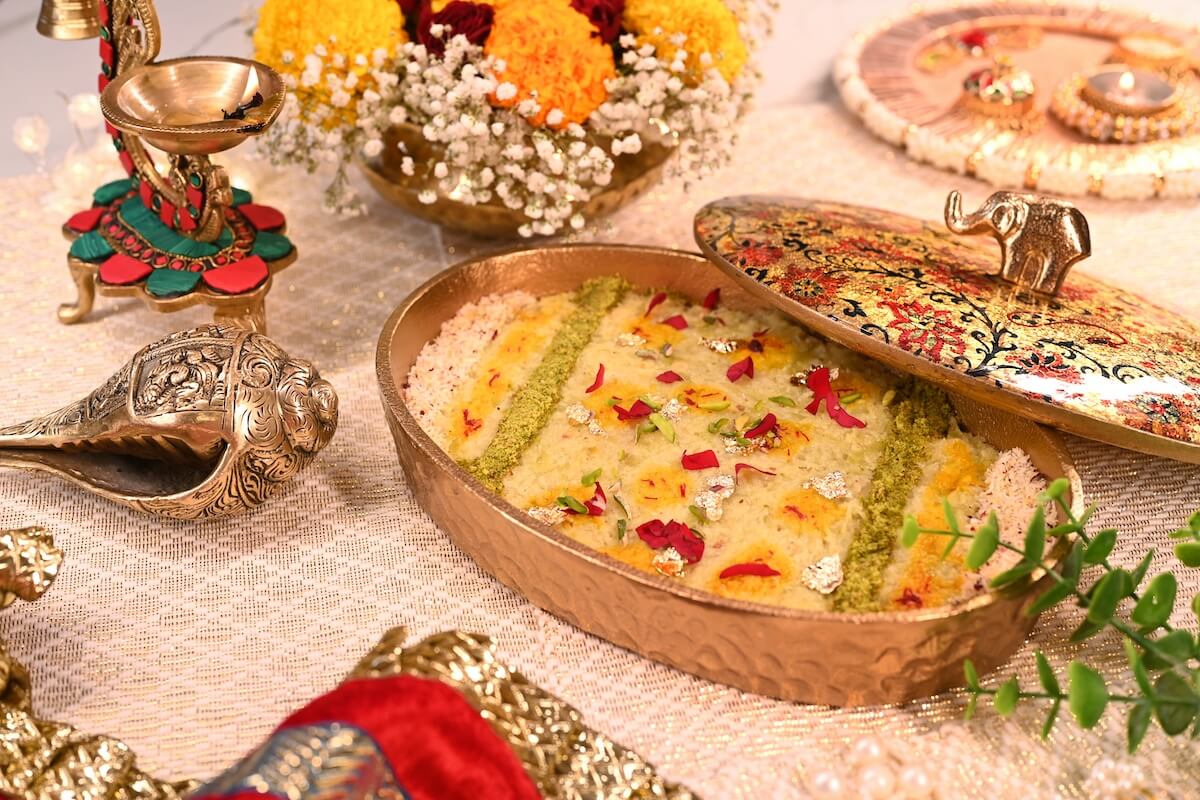
Lauki Nariyal Halwa — rich, creamy, and delicately flavored with coconut and cardamom, this traditional Indian sweet is perfect for Navratri fasting! Made with freshly grated bottle gourd, milk, coconut, and roasted nuts, it has a beautifully soft texture and a lovely richness from ghee. Finished with pistachio dust, saffron, and rose petals, this comforting halwa makes for a beautiful festive prasad!
WATCH HOW TO MAKE LAUKI NARIYAL HALWA:
For a festive touch, I’ve served this halwa in a beautiful traditional dabba, garnished with pistachio dust, coconut, saffron, and delicate rose petals. It’s a simple yet elegant way to turn an everyday sweet into something truly special for the festive season. Perfect for offering as prasad, sharing with family, or adding to your Navratri celebrations!
There’s something so special about preparing homemade sweets during Navratri, and this Lauki Nariyal Halwa brings together simple ingredients and traditional flavors in the most delicious way. The natural sweetness of lauki, richness of coconut, and warmth of cardamom create a wonderfully comforting dessert. The secret is to cook it slowly while keeping it slightly moist, giving it that perfect soft, melt-in-your-mouth texture.
Lauki Nariyal Halwa — a rich and creamy Indian sweet made with grated bottle gourd, coconut, milk, and ghee! Flavored with cardamom and roasted nuts, this soft, melt-in-mouth halwa is a beautiful prasad for Navratri celebrations!
Course:
Dessert
Cuisine:
Indian
Keyword:
fasting, mithai
Custom Category:
Desserts, Fasting Recipes, Indian Sweets
Servings: 6
Calories: 214kcal
Author: Nidhi Bothra
Ingredients
Halwa:
4cupslauki (bottle gourd or opo squash), grated using the thick side of a box grater
1/2cupfresh coconut, grated
3 1/2cupsmilk, divided (2 cups + 1½ cups)
1/4cup + 1 tbspsugar, to taste
2/3tspcardamom powder
2 1/2tbspghee, divided (1 tbsp + 1½ tbsp)
2-3tbsproasted mixed nutsalmonds, cashews, and pistachios, finely chopped
Garnish:
pistachio dust
desiccated coconut mixed with dried rose petals
saffron strands, soaked in water
edible gold foil, optional
Instructions
Heat 1 tbsp ghee in a heavy-bottomed pan on medium heat. Add the coarsely grated lauki without squeezing out its moisture. Sauté for 5–7 minutes, stirring continuously. The lauki will release its natural water. Continue cooking until most of the moisture evaporates, the lauki softens, and its color starts changing.
Add 2 cups milk and let it simmer on medium heat for 7–8 minutes until the lauki is nicely cooked and tender. Keep stirring continuously to prevent the milk from sticking to the bottom of the pan.
Add the freshly grated coconut along with the remaining 1½ cups milk. Mix well and continue cooking on medium heat until the milk reduces and the mixture starts coming together. Keep stirring throughout so nothing sticks to the bottom.
Add sugar and continue cooking for another 4–5 minutes until everything comes together into a soft, creamy halwa. Don't let all the moisture evaporate, as the halwa will thicken further while cooling.
Mix in the cardamom powder, finely chopped roasted nuts, and remaining 1½ tbsp ghee. Stir until everything is well combined and the halwa develops a lovely shine. Turn off the heat.
Let the halwa rest for about 5 minutes before transferring it to your serving dish or traditional dabba. Spread it evenly and allow it to cool slightly.
Garnish with pistachio dust, desiccated coconut mixed with rose petals, and little dots of saffron-infused milk. Finish with edible silver foil, if using. Your Lauki Nariyal Halwa is ready to enjoy!
Recipe Video
Recipe Notes
Grating the lauki: Use the thick side of a box grater for a slightly coarse texture. There's no need to squeeze out the moisture, as it will evaporate while sautéing.
Keep stirring: Stir continuously during cooking, especially once the milk is added, to prevent the halwa from sticking to the bottom of the pan or burning.
Don't make it too dry: This is the most important tip! Keep the halwa slightly moist because it will thicken as it cools down. This helps maintain its soft, creamy texture even the next day.
Coconut: Freshly grated coconut works best, but you can substitute desiccated coconut. If using desiccated coconut, add a little extra milk as needed since it absorbs more moisture.
Sweetness: Adjust the sugar according to your taste.
Storage: Once completely cooled, transfer to an airtight container and refrigerate for up to 3–4 days. Keep refrigerated rather than leaving it at room temperature for extended periods.
Nutrition Facts
Lauki Nariyal Halwa
Amount Per Serving
Calories 214Calories from Fat 99
% Daily Value*
Fat 11g17%
Saturated Fat 8g50%
Trans Fat 0.1g
Polyunsaturated Fat 0.4g
Monounsaturated Fat 3g
Cholesterol 27mg9%
Sodium 69mg3%
Potassium 356mg10%
Carbohydrates 24g8%
Fiber 1g4%
Sugar 20g22%
Protein 5g10%
Vitamin A 140IU3%
Vitamin C 1mg1%
Calcium 203mg20%
Iron 1mg6%
* Percent Daily Values are based on a 2000 calorie diet.
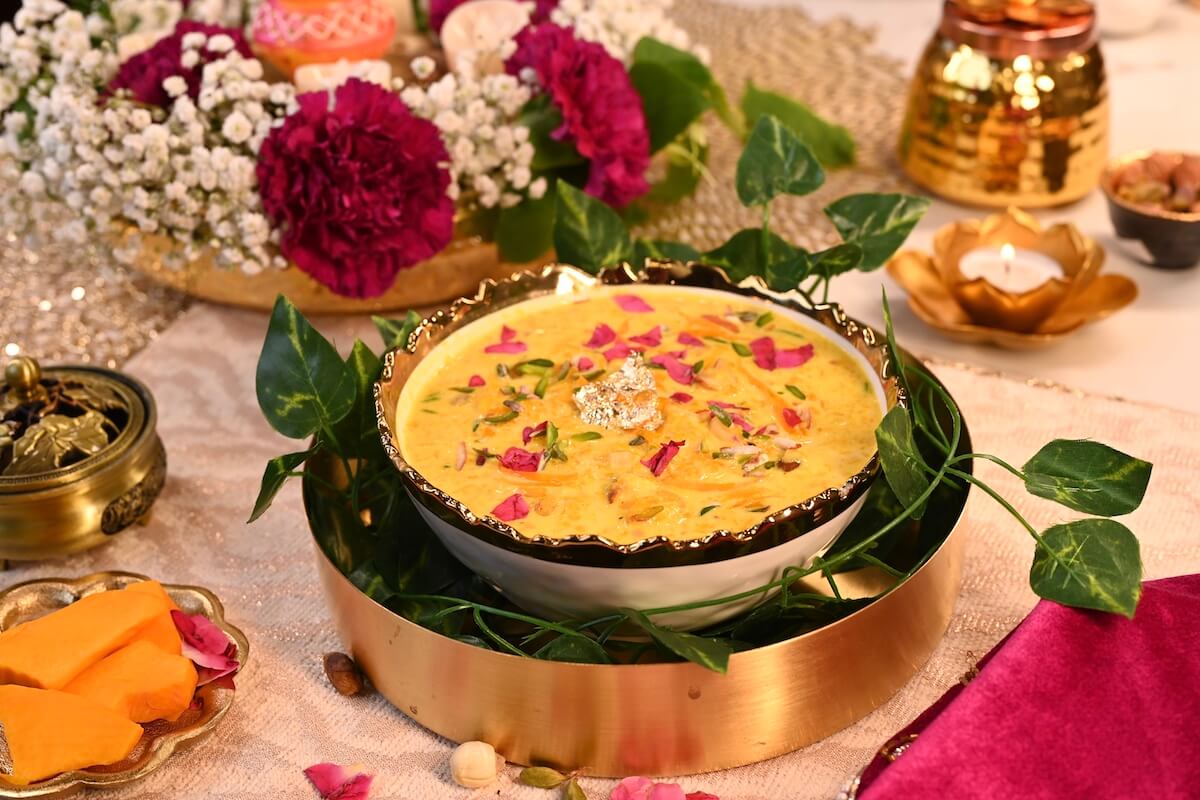
Creamy, comforting, and delicately flavored with saffron and cardamom, this Pumpkin Makhana Kheer is a wholesome festive dessert made with tender grated pumpkin, toasted makhana, and ghee-roasted nuts. Perfect for Navratri fasting, celebrations, or whenever you’re craving something sweet and comforting!
WATCH HOW TO MAKE PUMPKIN MAKHANA KHEER:
As we welcome Maa into our homes and hearts, may these nine sacred days bring divine blessings, peace, positivity, and prosperity.
What better way to begin this beautiful celebration of devotion and gratitude than with a bowl of homemade Pumpkin Makhana Kheer? Made with the natural goodness of pumpkin, roasted makhana, saffron, cardamom, and crunchy nuts, this lightly sweetened kheer is a simple yet special offering prepared with love for Maa.
The pumpkin adds a beautiful golden color and subtle sweetness, while the makhana gives the kheer a lovely creamy texture without needing to reduce the milk for hours. It’s nourishing, festive, and incredibly easy to prepare.
Why You’ll Love This Recipe:
Perfect for Navratri: Made with simple, vrat-friendly ingredients.
Naturally creamy: Makhana absorbs the milk and thickens the kheer beautifully.
Lightly sweetened: Just a little sugar brings all the flavors together.
Beautiful festive flavors: Saffron, cardamom, and ghee-roasted nuts make every spoonful special.
Easy to prepare: No lengthy milk reduction or complicated steps.
Tips for the Perfect Pumpkin Makhana Kheer:
Use a coarse grater: Coarsely grated pumpkin retains a delicate texture without turning mushy during cooking.
Don’t over-reduce the milk: Unlike traditional kheer, this recipe doesn’t require prolonged simmering. Makhana naturally absorbs the milk, creating a rich, creamy consistency.
Adjust the consistency: The kheer continues to thicken as it cools. If it becomes too thick, stir in a little warm milk before serving.
Adjust the sweetness: The pumpkin contributes a subtle natural sweetness, so ¼ cup sugar is usually enough. Feel free to adjust according to your preference.
Using jaggery instead of sugar: Allow the cooked kheer to cool until warm before adding melted and cooled jaggery to prevent the milk from curdling.
For Navratri fasting: Use ingredients that follow your family’s vrat traditions.
Serving Suggestions:
Pumpkin Makhana Kheer tastes wonderful both warm and chilled. For festive celebrations, serve it in traditional brass or silver bowls, finished with saffron strands, chopped pistachios, and delicate dried rose petals.
It also makes a lovely prasad offering during Navratri.
Storage:
Store the kheer in an airtight container in the refrigerator for up to 2–3 days. It will thicken as it sits, so add a splash of milk when reheating to adjust the consistency.
Frequently Asked Questions:
Can I make Pumpkin Makhana Kheer ahead of time?
Absolutely! You can prepare it a day ahead and refrigerate it. Add a little milk before serving if needed.
Can I use jaggery instead of sugar?
Yes! Jaggery adds a lovely earthy sweetness. Just remember to add it once the kheer has cooled to warm, rather than while boiling.
Why does my kheer become thick after cooling?
Makhana continues absorbing milk even after cooking. This is completely normal. Simply adjust the consistency with a little extra milk.
Can I serve this kheer chilled?
Yes! It tastes delicious both warm and chilled, making it perfect for festive gatherings.
Creamy, comforting and delicately flavored with saffron and cardamom, this Pumpkin Makhana Kheer combines tender grated pumpkin, toasted makhana and crunchy ghee-roasted nuts. A wholesome, lightly sweetened dessert perfect for Navratri and festive celebrations.
Course:
Dessert
Cuisine:
Indian
Keyword:
fasting, mithai
Custom Category:
Desserts, Fasting Recipes, Indian Sweets
Servings: 6
Calories: 232kcal
Author: Nidhi Bothra
Ingredients
5cupsmilk
2cupspumpkin (kaddu), coarsely grated
3/4cupphool makhana (puffed lotus seeds or fox nuts), toasted and roughly broken
1/4cupsugar, or to taste
1 1/2tspcardamom powder
8–10 strandssaffron, soaked in 1 tsp warm water
2tspghee, for sautéing pumpkin
1tspghee, for roasting makhana
1/2tspghee, for roasting nuts
1/4cupmixed nuts, cashews, almonds and pistachios, chopped
dried rose petals, for garnish
pistachio, chopped, for garnish
Instructions
Simmer the milk: In a heavy-bottomed pan, bring the milk to a boil. Reduce the heat and let it gently simmer for 7–8 minutes, stirring occasionally.
Sauté the pumpkin: Meanwhile, heat 2 tsp ghee in a separate pan. Add the coarsely grated pumpkin and sauté over medium heat until slightly softened, about 5–6 minutes.
Roast the makhana: Heat 1 tsp ghee in a pan and roast the makhana until crisp. Let it cool slightly, then roughly break it into smaller pieces.
Roast the nuts: In the same pan, heat ½ tsp ghee and lightly roast the chopped cashews, almonds and pistachios until fragrant. Set aside.
Cook the pumpkin: Add the sautéed pumpkin to the simmering milk. Mix well and cook for another 5 minutes, allowing the pumpkin to soften further.
Add the makhana: Stir in the toasted and roughly broken makhana and simmer for 2–3 minutes. The makhana will begin absorbing the milk and naturally thickening the kheer.
Sweeten: Add the organic sugar and mix well. Continue simmering for another 3–4 minutes, stirring gently.
Finish with aromatics: Add the saffron along with its soaking water, cardamom powder and roasted mixed nuts. Bring everything to a gentle boil, then turn off the heat.
Serve: Transfer to a serving bowl and garnish with chopped pistachios, nuts and dried rose petals. Enjoy warm or chilled.
Recipe Video
Recipe Notes
Makhana quantity: I recommend keeping ¾ cup makhana for 5 cups of milk and 2 cups of pumpkin. This gives a lovely balance of creaminess, pumpkin texture and makhana without making the kheer overly thick.
Don't over-reduce the milk: Makhana absorbs milk quickly, and the kheer will continue to thicken as it cools. Keep the consistency slightly loose while cooking.
Sweetness: ¼ cup sugar is ideal for a delicately sweet kheer. Adjust to taste.
Jaggery option: If using jaggery instead of sugar, allow the kheer to cool until warm before stirring in melted, cooled jaggery. Adding jaggery directly to boiling milk can cause curdling
My suggestion: Keep the recipe exactly at ¾ cup makhana. With 2 cups of grated pumpkin, you'll already have plenty of texture. Using 1 cup makhana might make the kheer too thick, especially after refrigeration.
Nutrition Facts
Pumpkin Makhana Kheer
Amount Per Serving
Calories 232Calories from Fat 90
% Daily Value*
Fat 10g15%
Saturated Fat 5g31%
Trans Fat 0.2g
Polyunsaturated Fat 1g
Monounsaturated Fat 4g
Cholesterol 23mg8%
Sodium 97mg4%
Potassium 559mg16%
Carbohydrates 29g10%
Fiber 2g8%
Sugar 19g21%
Protein 9g18%
Vitamin A 5171IU103%
Vitamin C 11mg13%
Calcium 273mg27%
Iron 1mg6%
* Percent Daily Values are based on a 2000 calorie diet.


 and share your creation with me!